
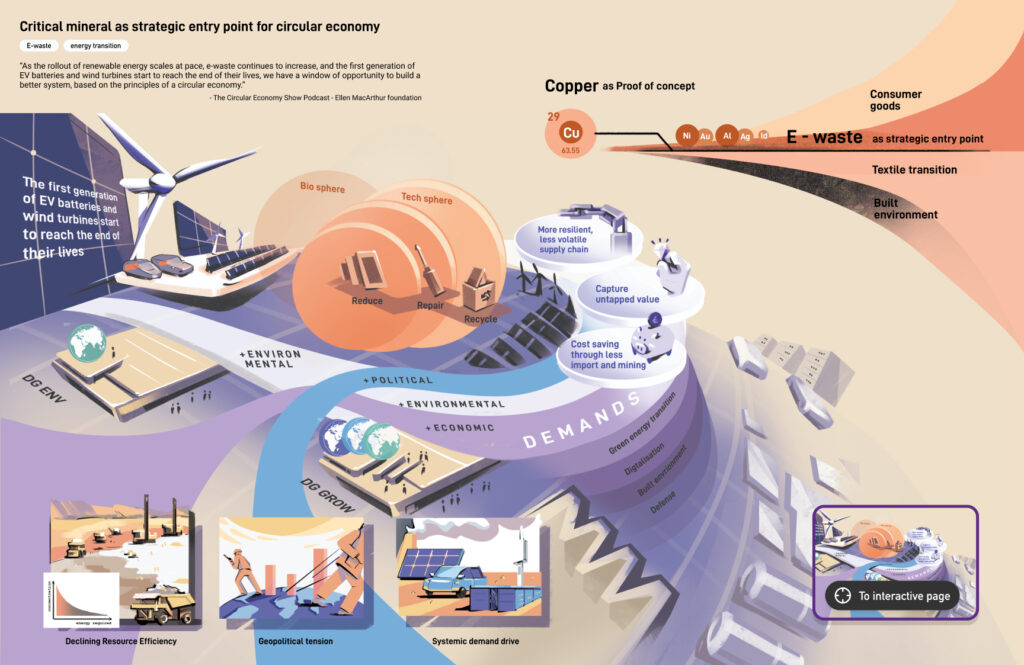
1. Circularity window due to energy transition
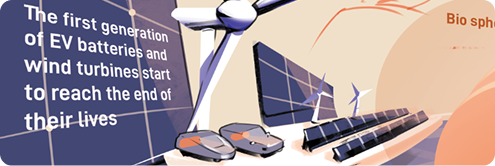
Where is it starting?
- China are seeing the most activity in battery retirement, recycling, and second-life repurposing centres [Transportenevironment, 2024].
- First-generation wind turbines are approaching end-of-life in regions that pioneered wind energy, especially in Europe. Notable countries with the oldest wind farms are having large-scale decommissioning, repowering, or lifetime extension projects underway. In particular, Europe expects 38 GW of onshore wind to reach a 20-year operational life by 2025.
- Typical life cycle
End-of-life for first-generation EV batteries and wind turbines is starting now (2025) in Europe, the US, and China—regions with the earliest large-scale deployments of these technologies. ‘China's retired power batteries will hit 1.04 million tonnes in 2025 and may surge to 3.5 million tonnes by 2030.'[Chinadailyhk,2025] - First-generation EV battery life is typically 8-15 years in vehicles, with repurposing for stationary storage adding up to 20 more years.
2. Shifting Regulatory Leadership in the EU
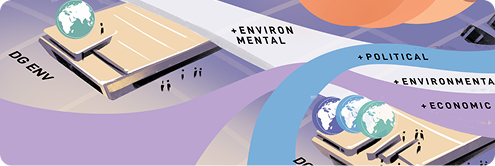
E-waste policies in the EU have shifted leadership from DG Environment (DG ENV) towards economic-focused bodies such as DG GROW, reflecting a broader industrial and supply security agenda as of 2025. The EU’s 2040 strategy must encompass energy security, defence, economic security, investment, and industrial strategy.
Associated regulations
- Circular Economy Act
- Clean Industrial Deal
3. Three drivers leads to broader motivations
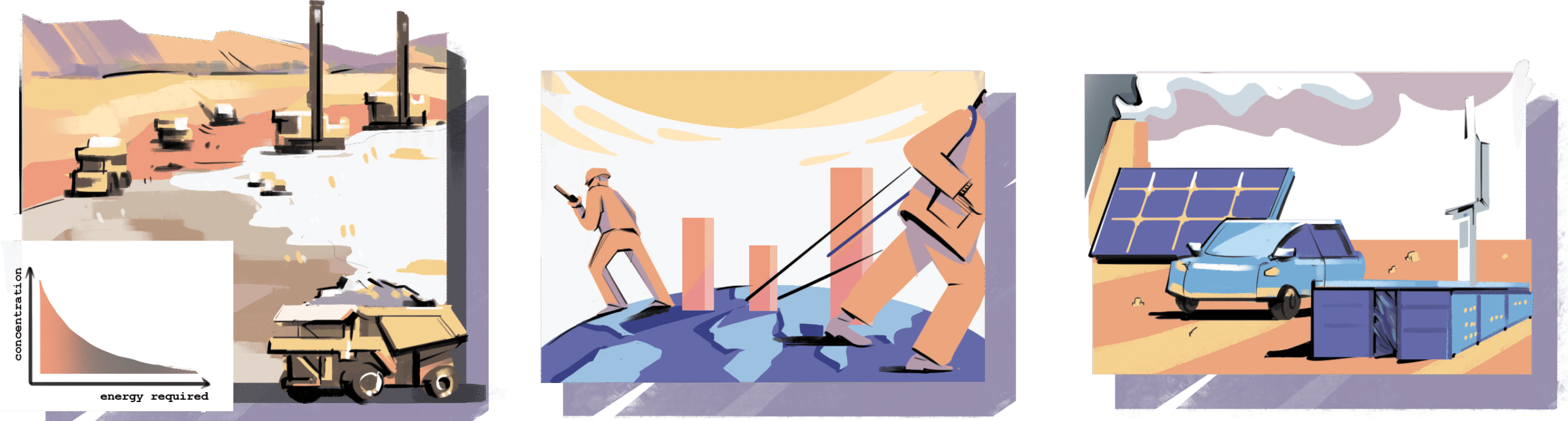
Declining resource security
- Declining resource efficiency ((less accessible or lower-quality deposits in the Earth’s crust)
- Rising costs of virgin mining.
Geopolitical tension
- The EU’s growing dependency on imports of critical minerals (e.g., from China and Brazil) exposes its supply chains to geopolitical risks, scarcity, and price volatility.
- Rising geopolitical tensions, recent export restrictions, and the concentration of supply highlight these risks and reinforce the need for policies on recycling, export monitoring, and strategic stockpiling to mitigate vulnerabilities.
Systemic demand
- Surging demand for critical minerals for energy transition (renewables energy infrastructure, EV batteries).
- Rapid digitalisation (data infrastructure and AI operations).
4. Long-term demands are pulling this circular transition
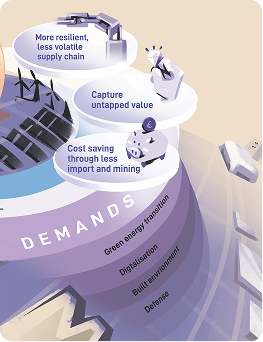
Significant future demands
- Green energy transition (batteries, wind, solar)
- Digitalisation (electronics, semiconductors, data centers)
- Built environment (smart infrastructure, electrification)
- Defense and strategic sectors (high-performance materials)
Economic Added Values of Circularity
- Cost savings through reduced import and mining reliance.
- Value creation from recovering critical minerals in e-waste.
- Risk reduction: more resilient, less volatile supply chains.
5. The R principles for E products and E wastes
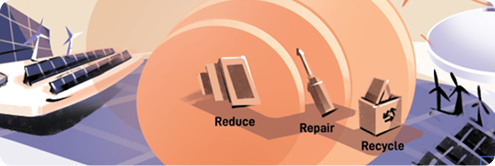
E-products circularity mainly follows the ‘Reduce - Repair -Recycle’ 3R principle.
- Reduce - Be conscious about purchasing electrical or electronic products. Reduce the amount of unused E products.
- Repair - To extend the usage of E products, repair if possible instead of reducing.
- Recycle - Having e-waste returned to the right recycling channel.
- Value degraded from ‘Reduce - Repair -Recycle’ order.
The Butter Diagram
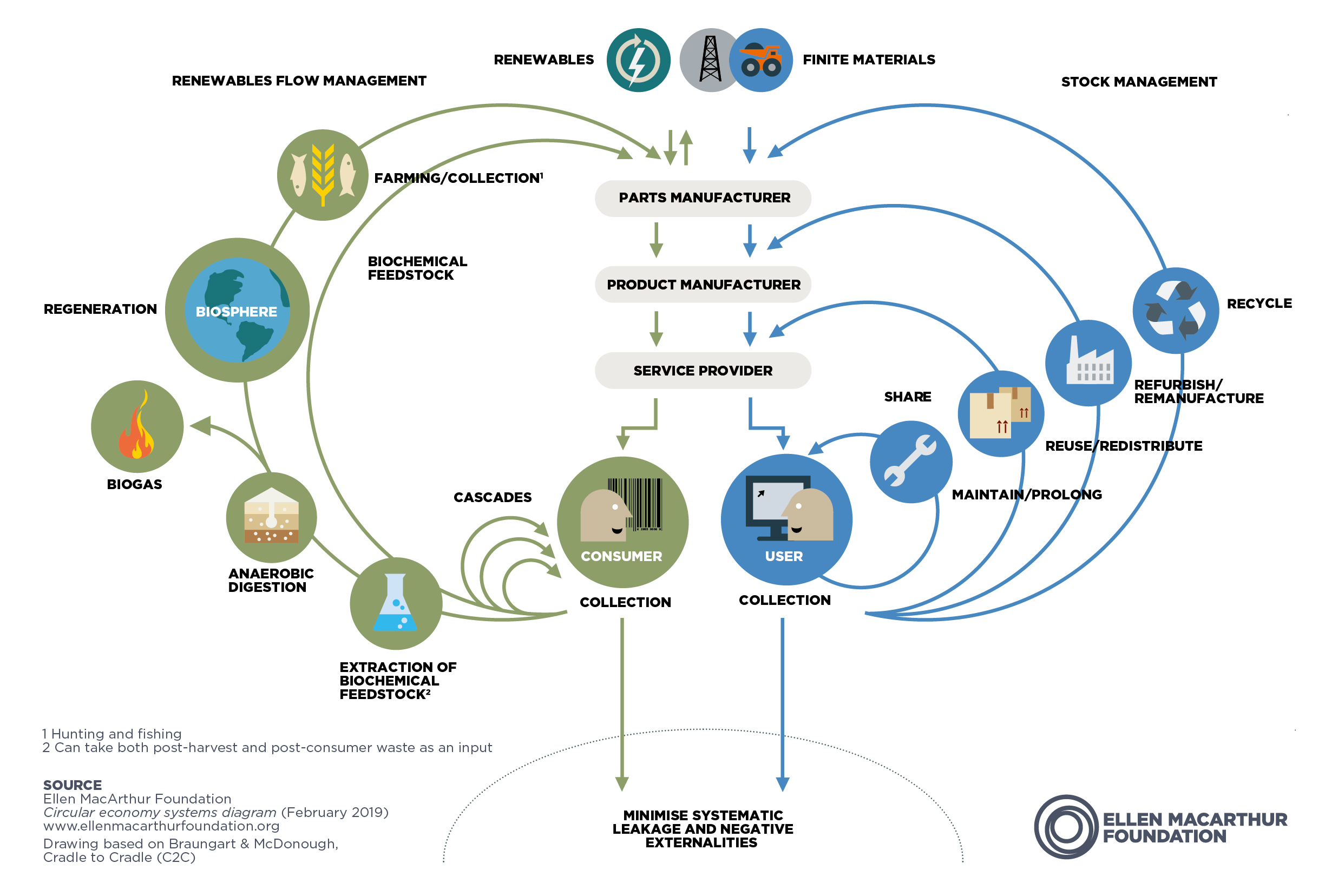
- This diagram is extracted from the Butterfly Circular Economy diagram, visualising the circular economy
5. Pivoting role of Copper in circular economy
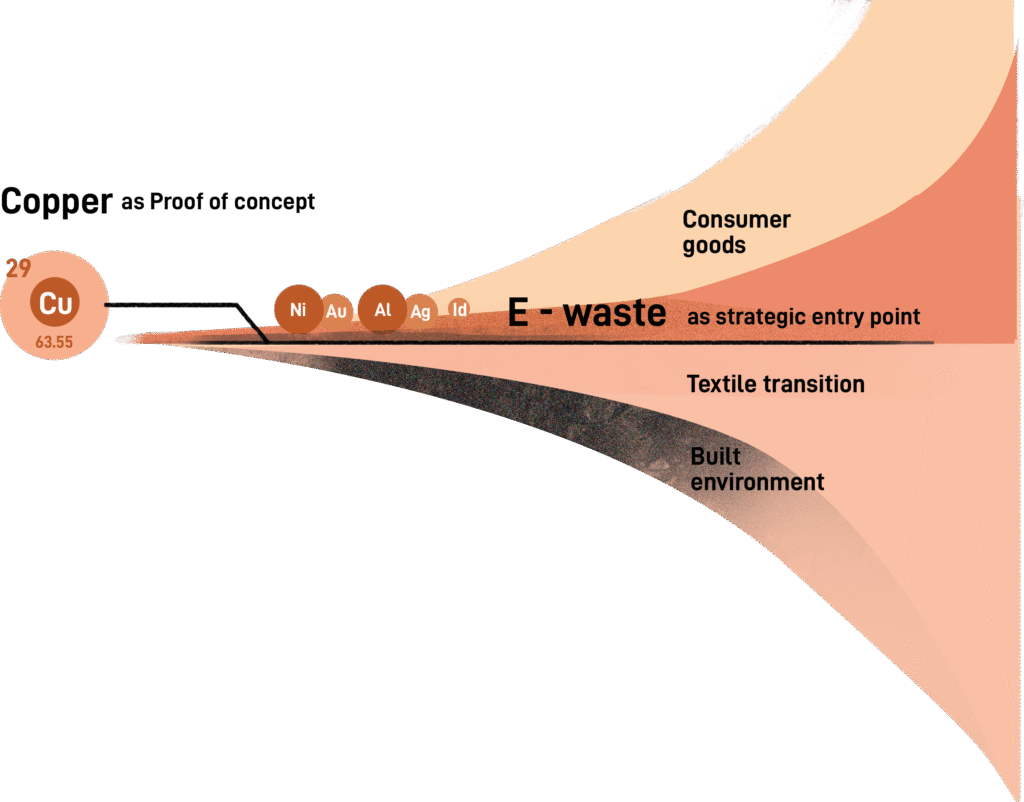
Why Copper
- Abundance in existing waste stream infrastructure
- Economic advantage compared to virgin material - Copper produced from recycled materials can save up to 85% of the energy needed for mining and extraction.
- Material property for wide applications
To double the recycling rate
- A reliable and steady supply of feedstock
- High-standard processing capacity
- Strong market demand for recycled copper